
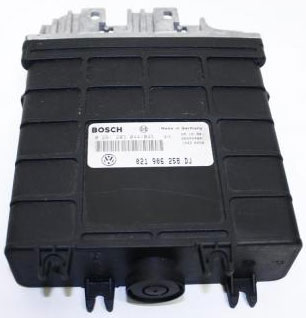
 Type: Bosch
Fits: VAG – Audi / Seat / Skoda / Volkswagen (VW)
Fuel: Diesel
Ref: ECUT221225
Note: This ECU may also fit other models.
Bosch EDC 1.3.2 is a family name rather than a part identity. The EDC 1.3.x run covers a series of closely related diesel engine ECUs, and two units can both be EDC 1.3.2 and still not be the same part. This page is about the EDC 1.3.2 in particular, and about the single thing that tells it apart from its immediate neighbours.
What identifies a unit is the ten-digit Bosch number carried on its own casing, the one beginning 0 281. That number resolves to one specific piece of hardware. The family designation does not — it describes a generation of design, shared out across units built for different engines and different cars.
The middle of the three is also the least written about. EDC 1.3.1 and EDC 1.3.3 both have a public record behind them; 1.3.2 sits between them with far less, which is why an owner holding one has such trouble confirming what it is. Setting out what we can confirm, and where the evidence stops, is the point of this page.
Two Bosch numbers are recorded against this unit: 0281001041 and 0281001339. Of the two, 0281001339 is the one independently confirmed — an EDC 1.3.2 fitted to Audi diesel. We hold no confirmed application for 0281001041, and we would rather say so than fill the gap with something we cannot stand behind.
The numbering across the family is exactly what makes mis-identification easy. Numbers a few digits apart belong to different units, for different cars:
- 0281001339 — EDC 1.3.2, Audi diesel
- 0281001316 and 0281001317 — EDC 1.3.3, Audi 80 1.9 TDI 90hp
- 0281001366 and 0281001367 — EDC 1.3.3, Audi A4 1.9 TDI 90hp
- 0281001201 — EDC 1.3.1, BMW E36 325tds
Only the first of those is an EDC 1.3.2. Two are a different member of the same family, and the last is not a VAG car at all. None of them stands in for another.
So a unit matched on the family name alone has not really been matched. A seller quoting EDC 1.3.2 is quoting a design generation, and nothing in that tells a buyer whether the hardware is the same hardware that came off the car. The ten-digit number is the only thing in that exchange that resolves to a single part.
That is the honest argument for repairing the unit you already have. A board taken off your own car needs no matching at all — it is, by definition, the right hardware for that vehicle. Replacing it puts the identification problem back in front of you and asks you to settle it from an advert and a family name. Repairing the original never raises it.
Units of this age generally reach us after a non-start, or after an engine that starts but will not rev out. That is the everyday context in which one of these is sent in for testing.
When a unit arrives here, the ten-digit number is where the work starts. Every unit is logged in, inspected and put on the test bench before any repair is proposed. We come back to you with what the testing found and what the work would involve, with the price on application, and no chargeable work begins until you have authorised it. The repair is carried out at component level on your own board, under a microscope with fine rework equipment, by our own engineers in our own UK workshop — so the board that goes back is the board you sent. Nothing is signed off until it has passed final testing, and the repair carries our 24-month warranty.
Audi units other than this one are gathered in the Audi part-number library. Units come to us by post from every part of the UK.
If the unit is in front of you, the ten-digit number is the single most useful thing you can send us. Put it on the Repair Form with a short account of how the car behaves.
Common part numbers associated with this type of unit
| Bosch Number | OEM Number | Price | Warranty |
|---|---|---|---|
| 0281001041 | £POA | 24 months | |
| 0281001339 | £POA | 24 months |
Related Posts
Land Rover Lucas 14CUX Engine ECU Repairs
Type: Lucas Engine Management Fits: Land Rover Fuel: Petrol Ref: ECUT73195 Note: This…
VW / Audi / Seat / Skoda (VAG) Bosch ME7.5.1 Engine ECU Repairs
Type: Bosch Engine Management Fits: VAG – Audi / Seat / Skoda…
Ford Visteon EECV LP2-110 Engine ECU Repairs
Type: Visteon Engine Management Fits: Ford Engines: Year: Fuel: Petrol Ref: ECUT39175 Note:…