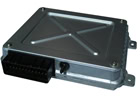
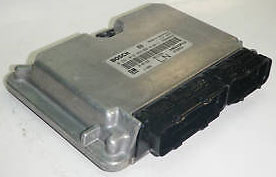
Rover Bosch EDC15M1 Engine ECU Repairs
Type: Bosch Engine Management Fits: Rover 25 / Rover 45 / MG ZR Fuel: Diesel Note: This ECU may also fit other models. The short version: a Rover Bosch EDC15M1 engine ECU comes by post, we test it,
Rover is a make that sends its own kind of engine ECU across the repair bench, because Rover largely ran its own British engine management rather than the Bosch or Denso systems that governed most of its rivals. The petrol cars — Metro, 25 and 45, the 75, the MGF and the MG ZR, ZS and ZT — were run by the Rover/Motorola MEMS system and, before it, by the Lucas CU-series of engine ECUs. Bosch only really appears on the later diesels, where the EDC platform took over injection control. That makes a Rover in the workshop a distinctly British-electronics job, and it is one we are set up for: we repair MEMS, Lucas and Bosch EDC engine ECUs at component level, in our own UK workshop, and return the original coded unit to you.
This page covers the Rover engine ECUs we hold repair coverage for across those three families, how each one tends to fail as the electronics age, how to tell the ECU is genuinely at fault rather than a sensor or the loom, and what a board-level repair gives you that a replacement unit cannot.
Rover petrol engine management falls into two British systems, and the later diesels add a third, Bosch platform. On the modular side, the Rover/Motorola MEMS units run the bulk of the petrol range: we repair the Motorola MEMS 3 that governs the later petrol cars, along with the earlier MEMS 1.9 and MEMS 1.6 variants that sit under the smaller-engined models. Alongside them we cover the Lucas CU-series, the British engine-management ECUs Rover fitted before and around the MEMS era — the well-known hot-wire Lucas 14CUX, plus the Lucas 4CU and Lucas 16CU among the wider CU family. On the diesel side, the later Rovers moved to Bosch injection control, and we repair those units too, including the Bosch EDC15C4 and Bosch EDC15M1.
Those named units are representative rather than the whole list. The full Rover library on this page runs to eighteen engine ECU part numbers across the MEMS, Lucas and Bosch EDC families, spanning the classic Rover and MG petrol models through to the later diesels. If your unit is listed below, we already know it. If you are not certain which ECU your car carries, our technical team will confirm coverage against the part number stamped on the casing rather than guessing from the model alone.
These are ageing electronics, and they fail in the ways ageing boards do. On the Motorola MEMS units the common problems are internal and electronic: dry or cracked solder joints that develop where components carry current and heat through years of heating and cooling cycles, degraded capacitors, and tired internal power supplies. The classic symptom is intermittent — a car that runs, then cuts out, then restarts once the board has cooled, or a unit that loses communication for no reason a scan tool can pin down. It is the sort of fault that comes and goes, worsens in cold or damp weather, and drives owners to replace sensors that were never the problem.
The Lucas CU-series units show their own age-driven signatures. Worn solder tracks, ageing capacitors and degraded internal components produce erratic running, hot-start or hot-running faults, and units that simply will not wake. On the Bosch EDC diesels, failed injector drivers and internal voltage regulators are the frequent culprits — the output stage inside the ECU that controls the diesel injectors gives up, and the result is a misfire, a lost cylinder or a no-start that swapping injectors does nothing to cure, which is one of the clearest signs the ECU itself is the cause. Across all three families these are board-level electronic faults, and board-level faults are exactly what a component-level repair is designed to correct.
The engine ECU reads the engine sensors, manages fuelling and ignition or injection timing, and drives the engine outputs. Because it sits at the centre of everything the engine does, a genuine fault can look like several other problems at once, which is why so many units get replaced when they did not need to be.
Before you conclude the ECU is at fault, it is worth ruling out the usual imposters: a failed sensor, a corroded or water-damaged connector, a chafed or broken wire in the loom, or a flat or failing battery giving the unit low or unstable voltage. Any of these can throw codes that point vaguely at the engine management without the ECU being at fault at all. A Rover engine ECU becomes the stronger candidate when the symptoms point inward rather than to a single system: repeated no-starts with no communication to the unit, running that cuts and revives with temperature, or several unrelated fault codes appearing together. You do not have to make that call alone. When a unit reaches us it is logged, visually inspected and electrically tested before any fault-specific diagnostics begin, and a repair is not treated as complete until it has passed final testing. If our testing shows the ECU is actually healthy, we tell you so.
A damaged Rover engine ECU can very often be repaired, and on the faults described above it usually can. That matters, because a replacement is rarely as simple as it sounds. A new or used unit has to be matched to your car and coded to it, and it will not carry your car’s existing immobiliser pairing, so the security relationship between engine and car has to be rebuilt. Used units bring their own history and their own risk. Repairing the original avoids all of that: we diagnose and correct the specific fault on the board — dry joints, degraded capacitors, a failed injector driver, a failed voltage regulator — so the unit keeps its original coding and its established relationship with the vehicle. The work is carried out under microscope with temperature-controlled rework equipment, in-house, by our own engineers, with no outsourcing at any stage. Every repair is backed by a 24-month warranty on the specific work carried out.
We work as a mail-in service covering the whole of the UK, so wherever you are, your Rover engine ECU can reach us. Remove the unit, note the part number from the casing, and send it in with your contact and vehicle details. From there the process is deliberately transparent: we test and diagnose the unit, contact you with the outcome and an estimate, and carry out no chargeable work until you have authorised it.
To get started, complete the Repair Form on our contact page and our engineers will confirm coverage for your exact unit. You can also browse the full Rover part-number library on our engine ECU repairs pages and the wider range of makes we cover under What We Repair.

Type: Bosch Engine Management Fits: Rover 25 / Rover 45 / MG ZR Fuel: Diesel Note: This ECU may also fit other models. The short version: a Rover Bosch EDC15M1 engine ECU comes by post, we test it,

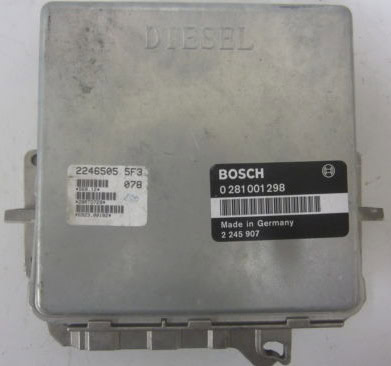
Type: Bosch Engine Management Fits: Rover 75 / MG ZT / Land Rover Freelander / Range Rover Fuel: Diesel Note: This ECU may also fit other models. A repair on your Bosch EDC15C4 is narrow in scope. We

Type: Bosch Engine Management Fits: Rover 200 / 400 / 600 / 800 / Land Rover Discovery / Freelander / Range Rover Fuel: Diesel Note: This ECU may also fit other models. This page carries the Rover name,

Type: Motorola Fits: Rover / MG / Land Rover Freelander Fuel: Petrol Note: This ECU may also fit other models. Motorola MEMS 3 belongs to petrol engines, and this ECU comes to our UK bench, where the repair

Type: Motorola Fits: Rover / MGF / Mini / Lotus Elise Fuel: Petrol Note: This ECU may also fit other models. We repair the Rover Motorola MEMS 2J. This ECU governs a petrol engine, and MEMS abbreviates Modular

Type: Motorola Fits: Rover / MGF / Land Rover Freelander / Lotus Elise / Morgan Plus 4 Fuel: Petrol Note: This ECU may also fit other models. Here we cover Rover Motorola MEMS 1.9 ECU repair. This ECU

Type: Motorola Fits: Rover / Mini / Land Rover Discovery Fuel: Petrol Note: This ECU may also fit other models. A Motorola MEMS 1.6 manages a petrol engine, MEMS being short for Modular Engine Management System. Our work

Type: Motorola Fits: Rover 214 / 220 / 414 / 420 / 820 / Metro / Mini Fuel: Petrol Note: This ECU may also fit other models. The Rover Motorola MEMS 1.3 is an ECU for petrol engines,

Type: Motorola Fits: Rover 214 / 414 / Metro / Mini Fuel: Petrol Note: This ECU may also fit other models. The Rover Motorola MEMS 1.2 is a Modular Engine Management System ECU, and it runs a petrol

Type: Motorola Fits: Rover Montego Fuel: Petrol Note: This ECU may also fit other models. Motorola ERIC is the system on carburettor engines, and this page covers its petrol engine ECU. Its repair ends with your own unit