
 The part of this engine ECU that had to be replaced was the one carrying the car’s immobiliser information. The unit is a Bosch M7.4.4, numbered 0261 207 318, from a 2004 Citroën Xsara Picasso 1.6. Because that information was recovered from the original EEPROM and written to its replacement, the car needed no programming when the repaired unit was refitted.
Cut out, then no start, with water suspected
A garage in Cardiff sent us the engine ECU after the Xsara Picasso cut out and then failed to start. The garage had diagnosed an ECU fault and suspected possible water damage.
Opening the unit bore that out. There were signs of water ingress on the ECU. How the water got there was not recorded, so we make no guess at it here.
“No communication”: why the diagnosis moved to the board
Initial testing ended almost as soon as it began: the ECU failed immediately with a “no communication” fault. A unit in that condition cannot be read or diagnosed over its plug, because it returns nothing to read. The diagnosis has to be made on the board itself, and here that turned up several damaged components.
We told the customer about the faults before going any further, and the repair went ahead from there. Every unit is handled that way: tested and diagnosed first, with no chargeable work started until the customer has authorised it.
Reading the immobiliser information out before the EEPROM was replaced
One of the parts that needed replacing was the EEPROM, which holds the immobiliser information. That information is what matches this ECU to this particular Xsara Picasso, so a replacement EEPROM fitted without it would have left the repaired unit no longer matched to the car.
So the order of work mattered. We removed the original EEPROM from the board, read its immobiliser information in a stand-alone programmer, and wrote that same information to the replacement before it was fitted. About half a dozen other components, also faulty, were replaced as well.
Removing and refitting parts on a board is carried out under a microscope, using temperature-controlled rework equipment.
With the customer’s own immobiliser information back in the customer’s own unit, the ECU kept its original immobiliser pairing with the car. That is why no programming was needed when it was refitted.
Two passes on the test rig
After the repair the ECU was tested again. It passed on the test rig with full communication, where the first test had got none, but it also showed a number of stored fault codes.
A pass with codes still stored was not treated as the finish. The codes were cleared and the ECU was put through the test once more, and this time it passed with no faults.
Only after that second pass did it go back to the customer, with our 24-month warranty covering the repair carried out.
The label on an Xsara Picasso 1.6 engine ECU
This unit is identified by two numbers, Bosch 0261 207 318 and PSA 96 484 834 80. Both are on record from the Citroën Xsara Picasso 1.6 petrol, and sellers list the unit as a Bosch M7.4.4, sometimes shortened to “M744” on the label.
The Xsara Picasso 1.6 is also on record with a second M7.4.4 number, 0261 206 633. So it is the Bosch number on the label, not the car, that identifies the unit. Both are listed on the M7.4.4 page that covers each Xsara Picasso number.
Repairs are handled by mail-in for senders anywhere in the UK. If an Xsara Picasso has cut out or will not start and the ECU is the suspect, use the Repair Form to send us what the garage found, along with both numbers from the label.
Units from a different Citroën model are covered from the Citroën hub, and engine ECUs from a different make of car from our main hub.
Related Posts

Mercedes-Benz ML430 Bosch ECU 0261206303 With a Badly Soldered Chip and No Start
Our testing rig gave two verdicts on this Bosch engine…

What type of car brake fluid is best for your vehicle?
You have a lot to take care of as a…
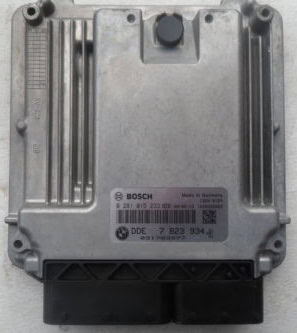
BMW 320d Would Not Restart: Bosch 0 281 012 754 ECU Beyond Repair, Replaced With Coding Transferred
This BMW 320d had been driving normally until its owner…