
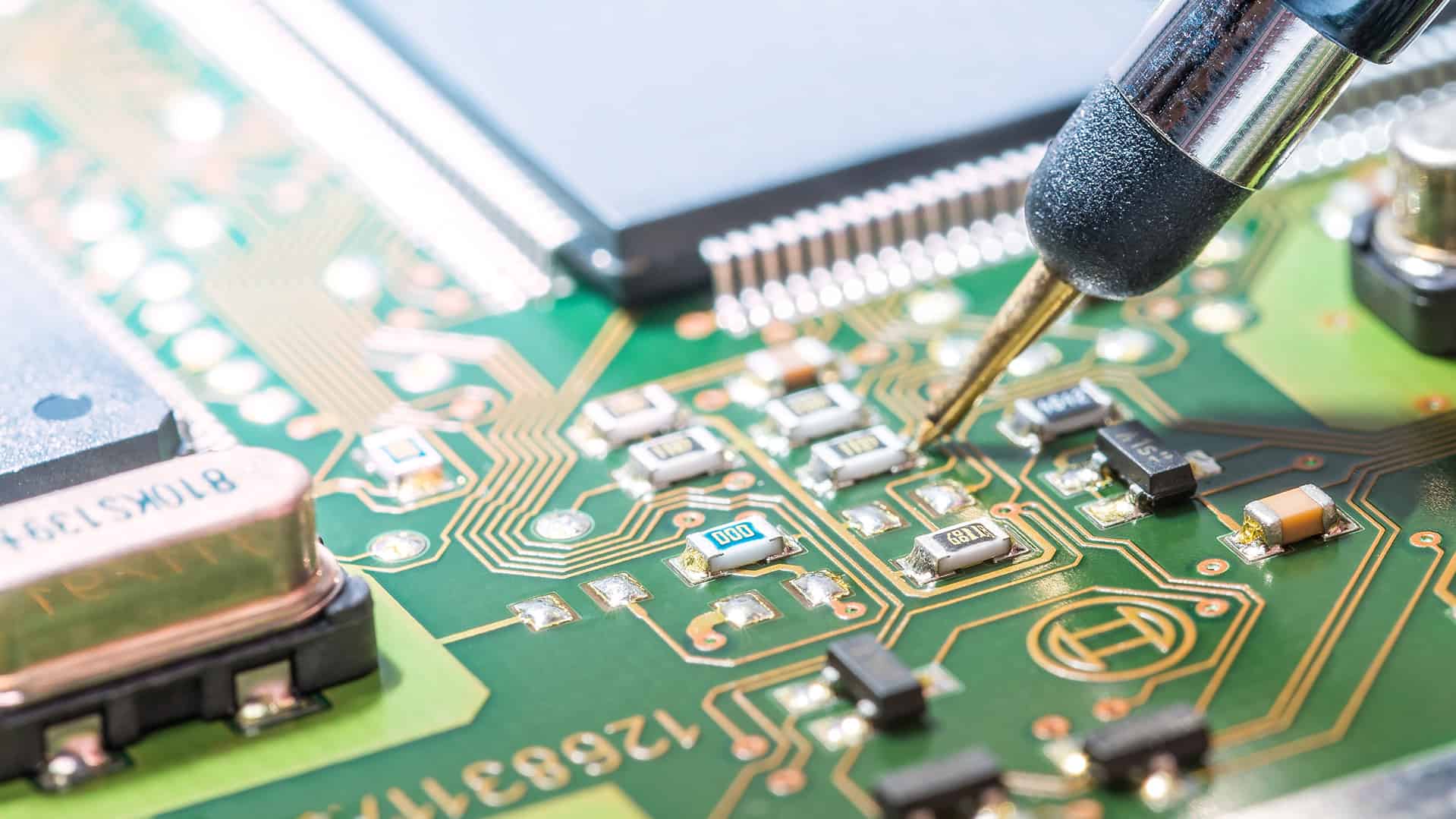
Every diagnostic check on a modern engine passes through the ECU, including the checks meant to establish whether the ECU itself has failed. The engine control unit reads the sensors, drives the injectors and ignition, and records whatever it sees going out of range, which makes it the most important witness in any engine diagnosis and, occasionally, the suspect.
This guide follows the diagnostic route from the first code read to a firm verdict on the unit: what a scan can and cannot tell you, the electrical checks that separate a wiring fault from a failed module, what each result points to, and why some ECU faults only show themselves on a bench.
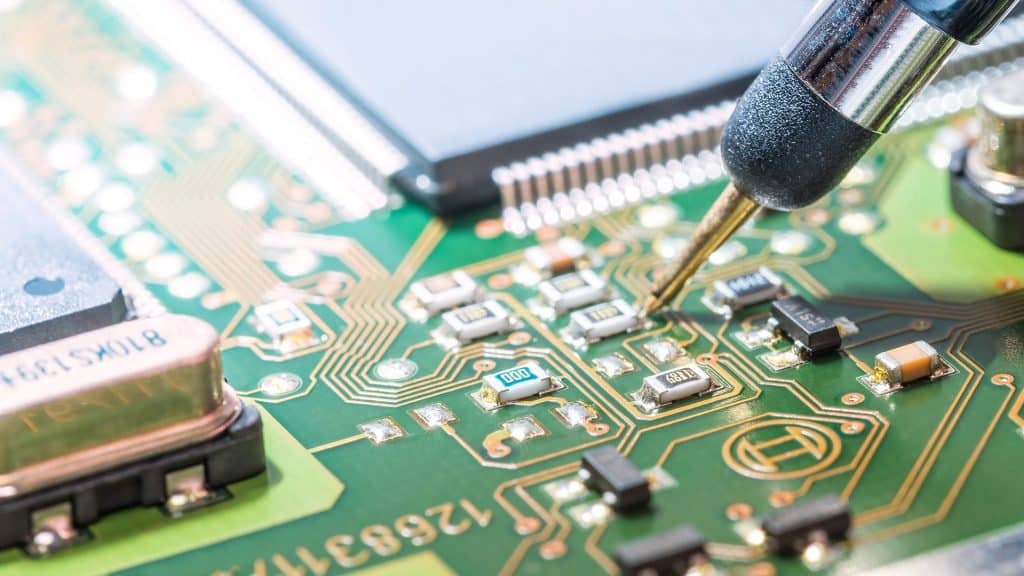
What a diagnostic scan can and cannot tell you about the ECU
The ECU checks its own inputs and outputs against tolerances written into its software. When a value stays outside its permitted range for a set period, the unit logs a diagnostic trouble code and, depending on the fault, lights the engine warning lamp or drops into limp mode to protect the engine. A scan tool connected to the diagnostic socket retrieves those codes, a freeze-frame snapshot of the conditions when each was logged, and live sensor data.
Each code opens with a letter for the system that logged it: P for powertrain, B for body, C for chassis and U for network communication. In engine diagnosis, the P and U codes carry most of the weight.
A fault code is the ECU’s report, not a verdict on it
What matters is whose report a code is. The ECU sets it after comparing what a circuit should be doing with what it is actually doing, so a code naming a sensor or an injector says only that the circuit misbehaved. The cause could be the component, its wiring, its connector or, less often, the ECU’s own stage for that circuit, and the code does not say which. An oxygen sensor code can be set by a perfectly good sensor whose signal is corrupted on the way to the unit.
The codes that genuinely point back at the unit form a narrower set: internal control-module faults, checksum or memory errors, and the absence of any code at all because the unit cannot be reached.
The blind spots of an on-car scan
A scan only works if the ECU is well enough to answer. A unit that has lost its supply or earth, or has a failed processor or network connection, cannot report its own failure: the scan tool simply shows no communication. That is a genuine finding, but it starts the electrical checks rather than ending the diagnosis.
Scans also miss faults the ECU has no routine to detect. A corroded or broken earth inside the unit, for example, can leave a sensor signal open to electrical interference, so the engine misbehaves while the peripheral circuits test normal and no code is stored. Faults that come and go with temperature can equally be absent at the moment the scan is taken.
The ECU diagnostic route, step by step
A sound diagnosis works from the outside in, proving everything that feeds the ECU before passing judgement on it. Ruling out the battery, fuel delivery, sensors and the other common impostors is covered in our guide to the symptoms of a failing ECM; the steps below follow the electrical route to the unit itself.
1. Record the codes and freeze-frame data first
Read every stored and pending code and note the freeze-frame data alongside it. Clearing the codes to see which return is a legitimate test, but only once they are written down, because a cleared fault memory is evidence thrown away.
2. Inspect the unit and its connector
With the battery negative disconnected, check the ECU casing and harness connector for water marks, corrosion, and burnt, bent or pushed-back pins. Visible damage does not end the diagnosis, but it tells the electrical checks where to look.
3. Prove supply and earth at the ECU connector
This check settles more ‘dead ECU’ cases than any other. At the connector, the permanent feed terminals, fed from the battery through a fuse, and the switched feed terminals, fed through the ignition switch or a relay, should each show battery voltage. The earth terminals should show genuine continuity to ground. A missing feed leads back to a fuse, the main relay or the wiring, and a poor earth is a wiring fault. Neither is an ECU fault, yet an ECU deprived of either behaves exactly like a failed one.
Measure on the harness side with the meter on the correct range. Probing the ECU’s own terminals with a low-resistance ohmmeter is a recognised way of damaging the unit.
4. Try communication again
With supply and earth proven, reconnect the scan tool. If the ECU now communicates, its power, earths, processor and basic functions are working, and the diagnosis moves on to data. If it still will not talk, the network wiring and its voltage levels come next, followed by the sensor reference supply.
5. Check the 5-volt sensor reference
The ECU feeds many engine sensors a regulated 5-volt reference. If it reads low, the cause is either inside the ECU’s power circuit or an external short pulling the line down. Disconnecting the sensors on that supply separates the two: an external fault lets the voltage recover, an internal one does not. A reference reading too high points at the ECU’s internal power circuit or its internal earth.
6. Read live data and substitute the signal
Live data shows what the ECU believes each sensor is telling it. Where a value is missing or implausible, the sensor can be disconnected and a known signal injected at the ECU end of the circuit. If the ECU reads the substitute correctly, the fault lies in the sensor or its wiring. If it still reads nothing and the connector is sound, the ECU’s input circuit becomes the suspect.
7. Check the outputs
Healthy inputs do not guarantee healthy outputs. If the ECU is receiving good signals but a cylinder will not fuel or fire, a test lamp or oscilloscope on the output side shows whether the unit is actually switching that injector or coil. A correct command reaching the output stage with nothing switched through points at the ECU’s driver circuit. Some injector circuits run at over 200 volts, so this is not a check to improvise.
8. Bench-test the unit off the car
When the on-car checks point at the ECU, or all pass while the fault persists, the unit comes out and is tested on its own. On a bench it is powered and its inputs and outputs are exercised directly, so its internal supplies are measured rather than inferred and each driver can be loaded. It is the only step that examines the module itself rather than the circuits around it.
Reading the results: test, result and what it points to
The same checks as a quick reference. Read each row as evidence rather than a verdict: it is the pattern across several rows that convicts or clears the ECU.
| Test | Result | What it points to |
|---|---|---|
| Fault code read | Codes naming a sensor, injector or coil circuit | That circuit: the component, its wiring or its connector |
| Fault code read | Internal control-module, checksum or memory errors | The ECU itself; confirm on the bench |
| Fault code read | No communication with the scan tool | Supply, earth or network wiring first; the ECU only once those are proven |
| Supply at the ECU connector | Battery voltage on permanent and switched feeds | Feeds are healthy; move on to earths |
| Supply at the ECU connector | A feed missing or low | A fuse, the main relay or upstream wiring, not the ECU |
| Earths at the ECU connector | Poor or no continuity to ground | An earth or wiring fault that can make a healthy ECU look failed |
| 5-volt sensor reference | Low, but recovers with sensors disconnected | An external short or excess load: a sensor or its wiring |
| 5-volt sensor reference | Still low with sensors disconnected, or too high | The ECU’s internal power circuit or internal earth |
| Live data, signal substituted at the ECU | Substitute read correctly | The original sensor or its wiring |
| Live data, signal substituted at the ECU | Substitute still not read, connector sound | The ECU’s input circuit |
| Output check (test lamp or oscilloscope) | Injector or coil not switched despite good inputs and supply | The ECU’s driver stage for that output, once the harness is proven |
| All on-car checks | Pass, but the fault keeps returning | An intermittent or heat-related fault: bench-test under operating conditions |
Intermittent and heat-related faults that pass on the driveway
The hardest ECU faults to diagnose are the ones that are absent when someone looks. A car that stalls once it reaches operating temperature, cuts out over rough roads or misbehaves only in wet weather can pass every static check above on a cold morning.
The causes are usually physical. Heat and vibration fatigue the solder joints on the board until they crack, and a cracked joint can conduct at one temperature and open at another. Corroded connector pins raise resistance and distort signals in ways that come and go. Neither shows reliably on a meter held against a cold unit.
What catches them is time under realistic conditions. A test rig that powers the ECU and feeds it signals as though it were fitted to the car can run a unit for extended periods while it warms, cools and works. A fault that appears once an hour is then recorded rather than missed, which is usually what settles a fault no one has been able to reproduce.
When the diagnosis says it is not the ECU
This is a common outcome and a good one. An ECU flagging a failing sensor or a broken earth is doing its job, and a diagnosis that proves the unit sound has worked. Sensors that throw ECU-shaped codes, such as a failing MAP sensor, and the wider causes of an engine malfunction light have their own guides.
One outcome needs particular care: the ECU has failed and something on the car caused it. A shorted injector, coil or solenoid can overload an ECU output, and if it is not found it will damage a repaired or replacement unit in the same way. Diagnosing a failed ECU properly always includes asking why it failed.
When the evidence points at the unit
The ECU stops being a suspect and becomes the diagnosis when the checks leave nowhere else to go. That usually means one or more of the following:
- No communication, with supply, earths and network wiring proven good.
- Internal control-module, checksum or memory codes.
- A sensor reference voltage that stays wrong with every external load disconnected.
- A substituted signal at the ECU input that the unit still cannot read.
- No injector or ignition drive despite good inputs, good supply and a proven harness.
- A fault that follows the unit onto the bench.
What has failed inside the unit, whether a driver stage, a regulator, a cracked joint or corrupted memory, is a subject of its own, set out in our guide to common ECU problems. Whether to repair the unit or replace it is the next decision, and ECU replacement vs repair walks through it.
Sending the unit to us for bench testing
At ECU Repairs, engine control units are the only thing that crosses our benches: ECUs, ECMs and PCMs from petrol, diesel, hybrid and direct-injection engines, across European, Japanese, Korean and American makes. Each unit is logged, visually inspected and electrically tested, then taken through fault-specific diagnostics by our own engineers in our UK workshop, and no repair is complete until it passes final testing.
Once the unit is diagnosed, we contact you with what we found and an estimated repair price, and no chargeable work starts until you authorise it. Where the fault is a component on a sound board, our component-level engine ECU repair replaces that part, and the unit keeps its original coding and immobiliser pairing. A 24-month warranty covers the repair we carry out.
The service is mail-in from anywhere in the UK. Complete the Repair Form to have our engineers confirm coverage and diagnose your unit, or find our phone number on the contact page if you would rather talk the symptoms through first.
Questions about ECU diagnosis
How do you test whether an ECU is bad?
By proving everything around it first, then testing the unit itself. Record the fault codes, inspect the connector, confirm battery voltage on the ECU’s feeds and continuity on its earths, then check communication, the 5-volt sensor reference, live data and the outputs. If those point at the ECU, or the fault persists with everything around it proven, the unit is bench-tested off the car.
Will a faulty ECU always store a fault code?
No. An ECU can only report what it has a routine to detect and is still able to detect. A unit that has lost power, earth or its processor cannot communicate at all, some internal faults set no code, and an intermittent fault may be inactive when the scan is taken. Once supply, earth and wiring are proven, no communication is itself one of the stronger signs of an ECU fault.
Can a garage code reader tell me if my ECU has failed?
Not on its own. A code reader shows what the ECU has recorded about the circuits it monitors, which tells you where to look rather than what has failed, and basic readers mainly reach the emissions-related side of the system. Confirming an ECU fault takes the electrical checks at the connector and, usually, a bench test of the unit.
How much does it cost to have an ECU tested?
There is no single figure, because the phrase covers different jobs: a code read, an on-car electrical diagnosis and a bench test of the unit itself, each priced differently and each affected by the vehicle. When a unit is sent to us, it is tested and diagnosed first, you are then given the outcome and an estimated repair price, and nothing chargeable goes ahead without your authorisation.
Can I keep driving while an ECU fault is diagnosed?
With caution, and not if the engine is stalling or cutting out. An ECU fault can drop the engine into limp mode, disable functions or shut it off without warning, which is a hazard in traffic. If the car is running normally with a steady warning light, drive gently and only as far as you need to.
Why does the fault disappear when the car is at the garage?
Because many ECU faults depend on conditions. Cracked solder joints and corroded pins can connect or open with temperature, moisture and vibration, so the fault is absent on a cold car in a workshop and present on the road. The codes and freeze-frame data it leaves behind help, and a bench test that runs the unit for long periods under realistic conditions is the usual way to catch it.
Does clearing the codes fix the problem?
No. Clearing codes erases the ECU’s record of a fault, not the fault. If the cause is still there the code returns, often straight away, and the freeze-frame data that would have helped diagnose it is gone.
Related Posts

Car Suspension Guide: What is Car Suspension System?
Imagine taking a long trip when each bump in the…

Renault Bosch MP7.0 Engine ECU Repairs
Type: Bosch Engine Management Fits: Renault Fuel: Petrol Ref: ECUT120195 Note: This ECU…
Citroen / Peugeot Magneti Marelli 48P.10 Engine ECU Repairs
Type: Magneti Marelli Fits: Citroen / Peugeot Fuel: Petrol Ref: ECUT109195 Note: This…