
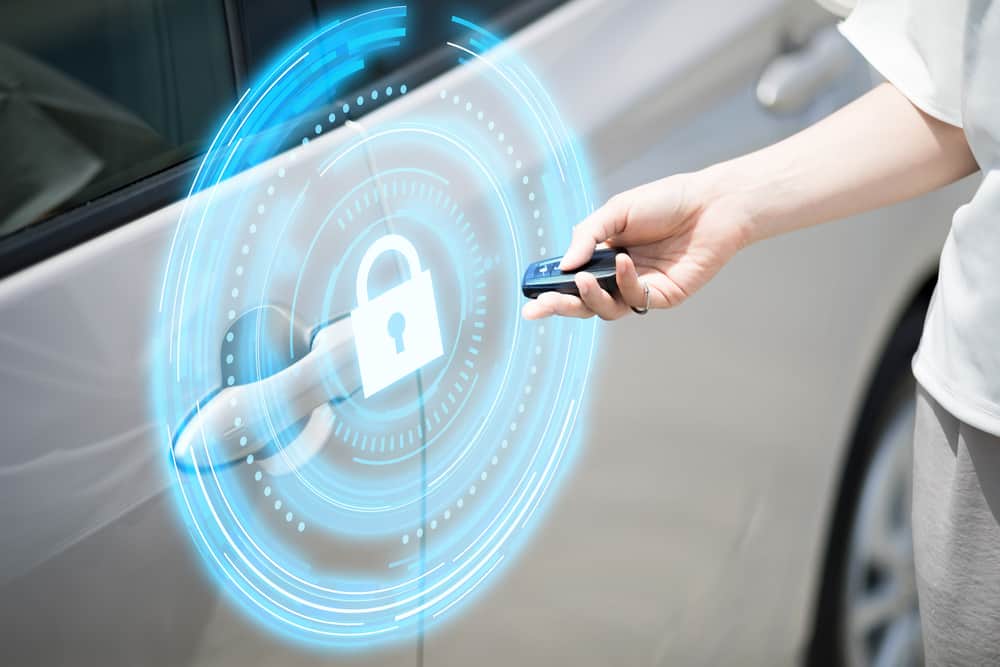
Car immobiliser systems fall into a handful of families — transponder (fixed and rolling code), encrypted, touch-key, remote, keyless smart-key, CAN-bus integrated and aftermarket add-ons — each differing in how the key proves itself to the car before the engine is allowed to start. This guide explains how each type works, how to tell which one your car uses, the faults they develop, and when a persistent no-start is actually an engine ECU problem rather than the immobiliser itself.
What a car immobiliser is and what it does
Every time you start a modern car, the key and the vehicle run a brief electronic check before the engine is allowed to fire. The immobiliser is the system behind that check. It is an electronic anti-theft device that keeps the engine from starting unless it receives proof that an authorised key is present, which is the main reason traditional hot-wiring no longer works on a car built in the last few decades.
It does this by withholding one or more of the things an engine needs to run — typically fuel delivery, the ignition circuit or the starter — until the correct code is recognised. If the code is missing or wrong, the car may crank without firing, or it may not crank at all. Immobilisers have been mandatory on new cars sold in the UK since 1998, and the first transponder-based systems appeared on some models from around 1992, so almost every car on the road today has one in some form.
The systems themselves vary a good deal in how the key proves its identity and how deeply the immobiliser is woven into the rest of the car’s electronics. Below we set out the main types, how to work out which one your car uses, the faults each is prone to, and an area most guides skip entirely: the point at which an immobiliser complaint turns out to be a fault inside the engine ECU rather than the security system itself.
How an immobiliser works: the key-to-ECU handshake
At the centre of every electronic immobiliser is a short exchange, often described as a handshake, between the key and the car’s electronics. Three parts make it happen, and each has to do its job for the engine to start.
- The transponder chip — a small chip inside the key or fob that stores a unique security code. On most systems it is passive, meaning it carries no battery of its own.
- The antenna coil or receiver — usually a ring around the ignition barrel, or an aerial on keyless cars, which powers the chip and reads the code it sends back.
- The control unit — the electronics that hold the authorised code and decide whether to allow the engine to run. On many cars this responsibility is shared between a dedicated immobiliser module and the engine ECU.
When you turn the key or press the start button, those parts run through a fixed sequence in a fraction of a second:
- The antenna coil energises the transponder chip in the key.
- The chip transmits its unique code back to the car.
- The control unit compares that code against the code it has stored.
- If the two match, the engine ECU is authorised to release fuelling and ignition, and the engine starts.
- If they do not match, or no valid code arrives, the car stays immobilised and the security light usually stays lit.
There is one detail here that most explanations gloss over, and it matters a great deal when things go wrong. On many vehicles the engine ECU is not just a bystander in this exchange — it holds part of the immobiliser relationship itself. The security code that pairs a car to its keys is often stored in the engine ECU’s memory, and the ECU will not release fuelling and ignition until it has confirmed that pairing over the car’s data network. That means a failure inside the engine ECU can break the handshake just as surely as a faulty key can, which is a point we return to further down.
The main types of immobiliser systems
Although they all perform the same basic job, immobilisers differ in how the key proves itself and how the system is built into the car. The table below summarises the main families, and the sections beneath it explain the ones worth understanding in more detail.
| Immobiliser type | How it works | Typical era / use | Common failure signs |
|---|---|---|---|
| Fixed-code transponder | Static code in the key chip, read by an antenna and matched by the car | Earliest transponder systems, roughly 1992 to late 1990s | Faded or damaged chip, worn antenna ring, no-start with security light |
| Rolling-code transponder | A fresh code is generated each ignition cycle by an algorithm shared by key and car | Late 1990s onward; became the industry standard | Loss of synchronisation, dead fob battery, aerial faults |
| Encrypted / cryptographic | An encrypted challenge-response runs before the code itself is even checked | 2000s onward on most modern cars | Module communication faults, corrupted stored security data |
| Touch-key | A chip in the key contacts a reader pad inside the car | Certain 1990s and 2000s models | Worn contacts, failed reader pad |
| Remote-fob immobiliser | A separate button fob arms and disarms the system, sometimes via central locking | Older factory and aftermarket systems | Lost or failed fob, receiver faults |
| Keyless / smart-key | Two-way encrypted radio link while the fob is in range, with push-button start | 2010s onward | Fob battery, aerial faults, exposure to relay attacks |
| CAN-bus integrated | Immobiliser function shared across networked modules, including the engine ECU | Modern networked vehicles | CAN communication faults, lost module pairing, corrupted ECU security data |
| Aftermarket add-on | An independent extra circuit disarmed by a tag or PIN | Retrofitted to older or higher-risk cars | Installation or wiring faults, tag or PIN problems |
Fixed-code and rolling-code transponders
The earliest transponder immobilisers held a single, permanent code in the key chip. An antenna around the ignition read that code and the car compared it against the one it had stored. It was effective against hot-wiring, but a determined thief with the right equipment could potentially capture and copy a static code.
To close that gap, manufacturers moved to rolling-code, or hopping-code, systems. Instead of one fixed code, the key and the car each calculate a fresh code for every ignition cycle using a shared algorithm, so intercepting one code achieves nothing because it is invalid the moment it has been used. This became the standard approach and remains the backbone of most factory immobilisers today.
Encrypted and cryptographic systems
Modern cars usually add an encrypted layer on top of the rolling code. The communication between the key and the car is encrypted, so the security code cannot even be read until the encryption has been satisfied. This makes cloning far harder and is now common across mainstream manufacturers.
Touch-key and remote systems
Touch-key systems place the transponder chip in the key and require it to make contact with a reader pad inside the car before the engine will start. Remote systems use a separate button fob that arms and disarms the immobiliser, sometimes tied into the central locking. Both are less common on newer vehicles but still turn up on a range of older models.
Keyless entry and smart-key systems
Keyless systems let the car detect the fob by proximity and start at the press of a button, using a two-way encrypted radio link. They are convenient, but they are also the class most exposed to relay attacks, in which the fob’s signal is captured and amplified from a distance. Because the fob is doing more work, a flat fob battery is also a more common cause of a no-start on these cars.
CAN-bus integrated immobilisers
On a networked car there is often no single immobiliser box. Instead the function is distributed across several modules — an immobiliser or body control module, the instrument cluster and the engine ECU — that exchange security data over the CAN bus. The engine ECU is an active participant here, holding pairing data and confirming it before the engine is allowed to run, which is why a communication or memory fault on the ECU side can present exactly like an immobiliser problem.
Aftermarket add-on immobilisers
Add-on immobilisers are fitted to cars that never had a factory system, or added as an extra layer of security. They work as an independent circuit, disarmed by a carried tag or a PIN sequence, and to satisfy insurers they generally have to isolate at least two of the car’s circuits, such as the fuel pump and the ignition. Because they are separate from the factory electronics, their faults are usually about the add-on’s own wiring, tag or PIN rather than the car’s original security.
Thatcham categories: the UK security ratings
In the UK, vehicle security systems are graded by Thatcham Research, an independent organisation founded in 1969 that tests and certifies alarms, immobilisers and tracking systems. It does not make the products; it assesses them, and insurers use its categories to judge how secure a car is. The categories most relevant to immobilisers are:
- Category 1 — a combined electronic alarm and immobiliser, with perimeter and movement sensors and a self-powered siren.
- Category 2 — an electronic immobiliser on its own, which must isolate at least two of the car’s operating systems or one control unit.
- Category 2/1 — a Category 2 car that has later had an approved alarm added.
- Category 3 — mechanical devices such as steering-wheel locks and gear-lever locks.
- Category 4 — wheel-locking devices, such as locking wheel nuts.
- Category S5 — tracking and recovery systems that can also immobilise a stolen car remotely.
- Category S7 — tracking and recovery without the remote-immobilisation feature.
Factory-fitted immobilisers are generally well integrated and specific to the model, which is why they tend to be considered the most reliable option. Where a car was never fitted with one, an approved aftermarket system rated under these categories is the recognised benchmark, and the right category usually comes down to the vehicle, how it is used and what an insurer asks for.
How to tell what immobiliser your car has
Insurers often ask what type of immobiliser a car has, and it is useful to know for your own peace of mind. There are a few reliable ways to find out:
- Check the owner’s handbook, which usually details the security system fitted and how it operates.
- Look the car up by its VIN (vehicle identification number), which can reveal factory-fitted security details.
- Ask the manufacturer or a main dealer, who can confirm what was fitted as standard for your model and year.
- Ask a qualified auto-electrician or mechanic, who can identify the system on the car itself.
A few simple observations narrow it down quickly, too. If you start the car with a chipped key you insert and turn, you almost certainly have a transponder system. If the car detects the fob in your pocket and starts at the press of a button, it is a keyless smart-key system. And if the car was built before 1998 and has no chip in the key, it may have no factory immobiliser at all, or an aftermarket unit fitted at some point in its life.
Common immobiliser problems and warning signs
A factory immobiliser rarely fails, but like any electronic system it can develop faults, and the symptoms are usually easy to recognise once you know what to look for. Typical warning signs include:
- The engine cranks but will not start, with no obvious mechanical cause.
- The immobiliser or security warning light stays on or flashes.
- The car intermittently fails to recognise a working key.
- No-starts that come and go, working one moment and refusing the next.
Most of the time, the cause is something ordinary. A dead or weakening key fob battery is by far the most common culprit, and replacing it resolves a large share of immobiliser-related no-starts, so it is always worth ruling out first. Beyond that, the usual suspects are a damaged antenna ring around the ignition, corroded connectors or wiring faults in the security circuit, and occasionally a failing immobiliser module.
There is one further cause that most guides leave out entirely, and it is the one that most often gets misdiagnosed: a fault inside the engine ECU that stops it completing its part of the security handshake. When the simple checks come back clean but the car still cranks without firing, this is the area to look at next.
When an immobiliser fault is really an engine ECU fault
As we saw earlier, on many vehicles the engine ECU stores part of the immobiliser relationship and has to confirm that pairing over the car’s data network before it will release fuelling and ignition. When something goes wrong inside the ECU itself, the handshake fails — not because the key or the security system is at fault, but because the ECU can no longer complete its side of the exchange.
This happens in a few recognisable ways. The immobiliser data held in the ECU’s memory can become corrupted, often through an EEPROM fault. The CAN bus transceiver that carries the security exchange between modules can fail, so the ECU never receives or acknowledges the confirmation it needs. Internal component faults can leave the ECU unable to run the security routine at all. In each case the result looks the same from the driver’s seat: the correct key is present, the engine cranks, the security light is on, and the car will not start. It presents as a security fault, yet the keys and the immobiliser are fine — the engine ECU simply cannot finish the handshake.
When the fault is genuinely inside the engine ECU, it is an engine ECU repair, not a security job. We diagnose and repair the specific fault on the unit at component level — a corrupted EEPROM, a failed CAN bus transceiver, or whatever the underlying cause turns out to be. Because the work is done at component level rather than by swapping the unit, the ECU keeps its original coding and immobiliser pairing, so the car still recognises its existing keys and nothing has to be re-coded or replaced. That is the whole point of repairing rather than replacing: the security relationship with the vehicle stays intact.
It is worth being clear about scope. This is specifically an engine ECU repair — it addresses the fault on the ECU, not the keys, the transponders or the immobiliser unit, which are separate from what we do. As a UK-based engine ECU specialist, every unit is repaired in-house by our own engineers, logged, inspected and put through fault-specific diagnostics, and no chargeable work begins until you have approved it. Repairs are carried out on a mail-in basis across the whole UK and are covered by a 24-month warranty on the work done. If a stubborn no-start traces back to the engine ECU, you can complete the Repair Form to have our engineers confirm coverage and diagnose your unit, or get in touch through our contact page.
Can thieves override an immobiliser?
Immobilisers have driven vehicle theft down dramatically since they became standard, but no security system is completely beyond a determined and well-equipped thief. It helps to understand the risk honestly, without treating it as a how-to.
The methods that make the news all rely on specialist equipment. Relay attacks capture and amplify the signal from a keyless fob so the car believes the key is nearby. Key cloning and attacks through the diagnostic port or CAN network attempt to trick the car’s electronics into authorising a start. Keyless smart-key cars are the most exposed, which is part of why keyless theft has risen even as overall theft has fallen.
For the vast majority of owners the immobiliser still does its job, and a few sensible habits close most of the remaining gap: keep keyless fobs in a signal-blocking pouch away from external walls, add a visible physical deterrent such as a steering-wheel lock, and park in a secure or well-lit spot where you can. Layering a simple physical measure on top of the factory immobiliser makes an opportunistic theft considerably harder.
Immobiliser FAQs
How do I know what type of immobiliser my car has?
Check the owner’s handbook, look the car up by its VIN, or ask the manufacturer, a main dealer or a qualified auto-electrician. As a quick guide, a chipped key you insert and turn points to a transponder system, while a fob that starts the car by proximity is a keyless smart-key system.
What’s the best car immobiliser?
For most drivers the factory-fitted immobiliser is well integrated and reliable, because it is designed specifically for the model. Where a car needs added security, a Thatcham-approved system is the recognised benchmark. There is no single best answer — the right choice depends on the vehicle, how it is used and what your insurer requires.
Can a dead key fob battery stop my car starting?
Yes. A flat or weakening fob battery is the single most common cause of an immobiliser-related no-start, particularly on keyless cars. It is always worth replacing the battery and following the manufacturer’s backup starting procedure before assuming a deeper fault.
Why does my car crank but not start with the immobiliser light on?
This usually means the engine has not been authorised to run because the security handshake did not complete. Often the cause is a fob battery, a worn antenna ring or a wiring fault. If those check out and the problem remains, the fault can lie inside the engine ECU, which may have corrupted immobiliser data or a communication fault that stops it completing its part of the exchange.
Can an immobiliser fault be repaired?
It depends on where the fault actually is. Many immobiliser complaints trace back to a fob battery, an antenna ring or wiring, which are addressed on the car. Where the fault is in the engine ECU’s stored immobiliser data or its security communications, the ECU can be repaired at component level, keeping its original pairing so the car still recognises its existing keys. That engine ECU repair is what we do — we do not program or clone keys, or work on the immobiliser unit or security modules themselves.
Immobilisers are one of the quiet reasons car theft looks nothing like it did a generation ago, and knowing which type your car uses makes their occasional faults far less alarming to deal with. Most immobiliser scares come down to something ordinary — a flat fob battery or a tired antenna ring around the ignition. When a car cranks but refuses to start with the security light on and the simple checks come up clean, the trail often leads back to the engine ECU that has to authorise the start, and that is a repairable fault rather than a reason to replace an expensive control unit.
Related Posts
How to Transfer a Number Plate from One Car to Another?
Owners of cars usually have a bond with their prized…

Navigating Emissions Regulations: BMW ECUs in the UK
In recent years, the automotive industry has witnessed a paradigm…
Future Trends in ECU Technology: Paving the Way for Intelligent Automotive Systems
In this article, we will explore some of the most…