
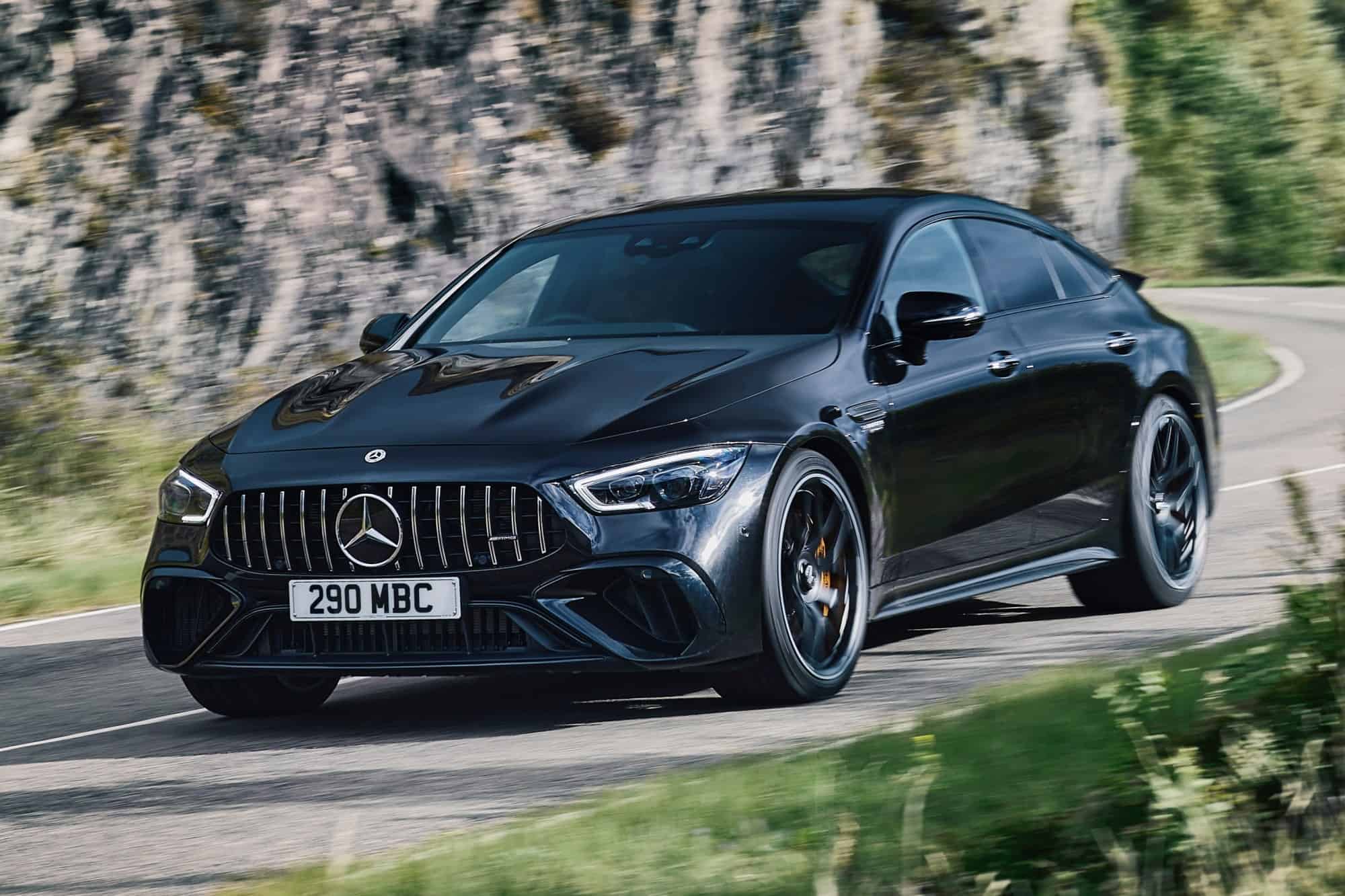
A Mercedes engine control unit (ECU) takes readings from its sensors and uses them to set injection, throttle opening and, on a petrol engine, ignition timing. Gear changes on an automatic and ABS fall outside that remit, because each has a unit of its own.

By performance we mean the engine running as designed, not extra power. This guide sets out what the ECU is responsible for, where that responsibility stops, and what a loss of power can tell you about the unit, and what it cannot. You may also see it called the ECM, short for engine control module; in this use the two names mean one unit.
What a Mercedes-Benz ECU reads and compares
Sensor readings reaching the ECU include:
- Crankshaft and camshaft position
- Coolant temperature
- Air mass or manifold pressure
- Throttle
- Lambda
It compares those readings with its software and stored data, and it records learned adaptations.
Within its remit: injection, ignition, throttle and emissions
Its outputs include:
- Injector timing and duration
- Ignition timing, on a petrol engine
- Throttle opening
Emissions fall within the same remit, since the ECU helps control them through its fuel and ignition control. This is the performance role in plain terms: the engine running as designed depends on those outputs.
Outside its remit: gear changes and ABS
On an automatic Mercedes, gear changes are run by a separate transmission control unit, which uses data from the engine ECU. ABS has its own module, not the engine ECU.
Control units share data over the CAN bus. Our repair work covers engine ECUs only.
How the remit shows up on the road
A driver can notice this in three ways.
Boost on a turbocharged Mercedes
On a turbocharged Mercedes the engine computer (another name for the ECU) compares requested boost with actual boost. A mismatch can cut power. The cause may be mechanical, such as a hose, an actuator or a wastegate, which are not ECU faults.
The engine warning lamp
A reading out of range can make the ECU store a fault and light the engine warning lamp. The lamp alone does not prove the ECU failed.
Limp mode
Limp mode limits power, revs or gear to protect the engine or gearbox when a reading is out of range. The fault behind it may not be the ECU.
Does a performance symptom prove a failed ECU?
No. Reported signs of a failing Mercedes ECU are misfire, a warning light, stalling, hesitation or power loss, and starting trouble. The same signs can come from sensors, wiring, boost leaks or mechanical faults, so none of them proves the unit failed.
If you suspect the ECU itself, it should be diagnosed and repaired by a qualified technician. We cover misfires on a Mercedes separately.
Mercedes engine ECU families by name
Mercedes engine ECUs include Bosch ME2.0, ME2.8, ME9.7 and EDC15C6. We have separate pages for the Bosch ME2.0, Bosch ME2.8 and Bosch EDC15C6. Our engineers confirm coverage.
Sending us your Mercedes engine ECU
We take no other kind of unit than the engine ECU. Repairs are done in-house, on the components themselves, inside our UK workshop. Mail-in is how units reach us, throughout the UK.
We log every unit, inspect it, test it electrically and run diagnostics on its particular fault. You then get the result. Nothing chargeable starts until you authorise it.
A repair is complete only after final testing is passed. Since nothing touches the coding or immobiliser pairing, your Mercedes takes the unit straight back: plug and play, no recoding. The warranty, 24 months long, stands behind that one repair and stays non-transferable.
Mercedes engine control unit questions
What does the ECU do in a Mercedes?
It reads sensors, compares those readings with its software and stored data, and sets outputs such as injector timing and duration, throttle opening and, on a petrol engine, ignition timing. Through that fuel and ignition control it also helps control emissions. On a turbocharged Mercedes it compares requested boost with actual boost.
Is the ECU the same as the ECM?
In this use, yes: ECU and ECM, short for engine control module, are two names for one engine unit. PCM is a looser term that can combine engine and transmission, so we do not use it for a Mercedes unit.
Does the ECU control the gearbox or ABS in a Mercedes?
On an automatic Mercedes, no: gear changes are run by a separate transmission control unit, which uses data from the engine ECU. ABS has its own module, not the engine ECU. Control units share data over the CAN bus, and our own work stops at the engine ECU.
What are the signs of a failing Mercedes ECU?
Reported signs are misfire, a warning light, stalling, hesitation or power loss, and starting trouble. None of them proves the ECU failed, because sensors, wiring, boost leaks or mechanical faults can give the same signs. Whether the unit itself has failed takes testing to establish.
Can limp mode be caused by something other than the ECU?
Yes. Limp mode limits power, revs or gear to protect the engine or gearbox when a reading is out of range, and the fault behind that reading may not be the ECU. Sensors, wiring, boost leaks and mechanical faults can give the same signs, so limp mode on its own leaves the cause open.
If the fault falls within its remit
Power loss on a Mercedes can begin within the ECU’s remit or outside it, and the symptom alone will not say which. We can test and repair that unit, which answers one half of the question. Complete the Repair Form to have our engineers confirm coverage and diagnose your unit.
Related Posts
Ford Visteon EECV LP2-318 Engine ECU Repairs
Type: Visteon Engine Management Fits: Ford Engines: Year: Fuel: Petrol Ref: ECUT43175 Note:…
Bosch EDC1.3.1 Engine ECU Repair for Vauxhall Diesels
Type: Bosch Engine Management Fits: Vauxhall Fuel: Diesel Ref: ECUT167225 Note: This ECU…

Renault Siemens Renix Engine ECU Repairs
Type: Siemens Fits: Renault Clio / Espace / Laguna / Megane /…